About . Est. 2011 . A1
An independent practice since 2011.
Two doctors, one optician, one front desk lead and a frame wall we actually like. No parent company deciding how long your exam gets to be.
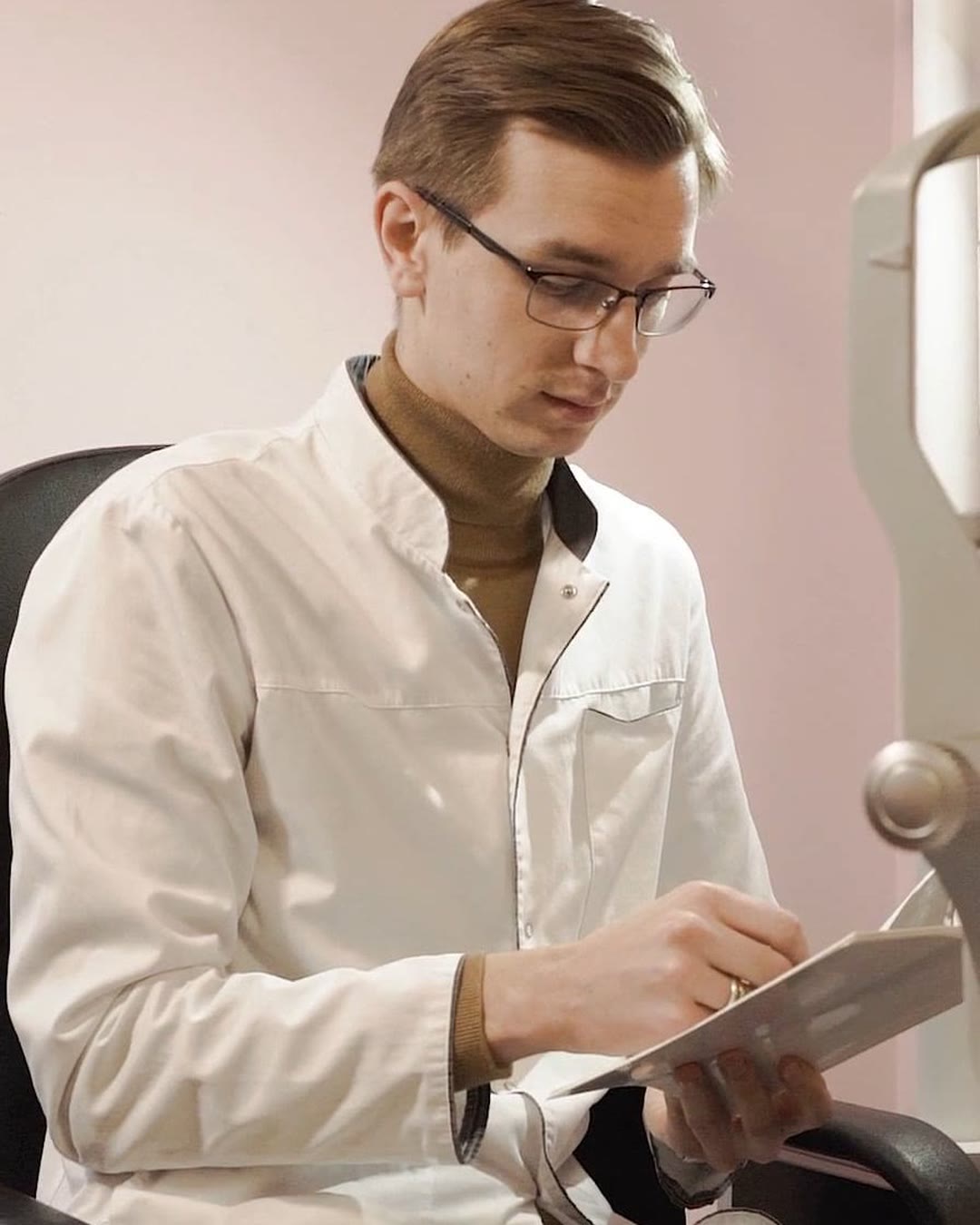
It started with one exam lane and a borrowed chair.
Dr. Hana Brandt opened On Point Optical in 2011 in the same building we are in now, back when the frame wall was two shelves and the waiting room was a bench. She had spent six years at a chain, seeing a patient every fifteen minutes, and wanted to find out what eye care looked like if you gave it room.
Dr. Luis Ortega joined in 2016 and brought the dry eye clinic with him. Mei came on as our optician in 2018 and rebuilt the frame wall around small makers. The second exam lane went in the year after.
We are still a small practice on purpose. Most of our patients have been coming back for years, and a lot of them now bring their kids.
Minutes per exam. That is the whole argument.
A typical chain exam runs fifteen to twenty minutes. Ours runs forty. That extra time is where we can spot an early cataract, pressure that is creeping up, or the reason your new glasses give you a headache by 3pm.
Nobody here is paid on commission. If your old frames are fine, we will tell you to keep them and just put new lenses in.
- Exam length
- 40 minutes per exam
- Lanes
- 2 exam lanes
- Open since
- 2011 same building
- Saturdays
- Sat open 9am to 3pm
The machines, in plain words.
| Machine | What it does for you |
|---|---|
| Phoropter | The big mask of lenses. It is how we land on your exact prescription, one "better one or two" at a time. |
| Slit lamp | A microscope with a thin beam of light. We look at the front of your eye: lids, cornea, lens, tear film. |
| Retinal camera | A wide photo of the back of your eye. Often replaces dilation, and we keep it to compare next year. |
| Tonometer | Measures eye pressure. A gentle puff or a quick touch after a numbing drop. A key glaucoma check. |
| Visual field tester | You click a button when you see a dot. It maps your side vision. |
| Topographer | Maps the curve of your cornea. Essential for fitting contacts that feel like nothing. |
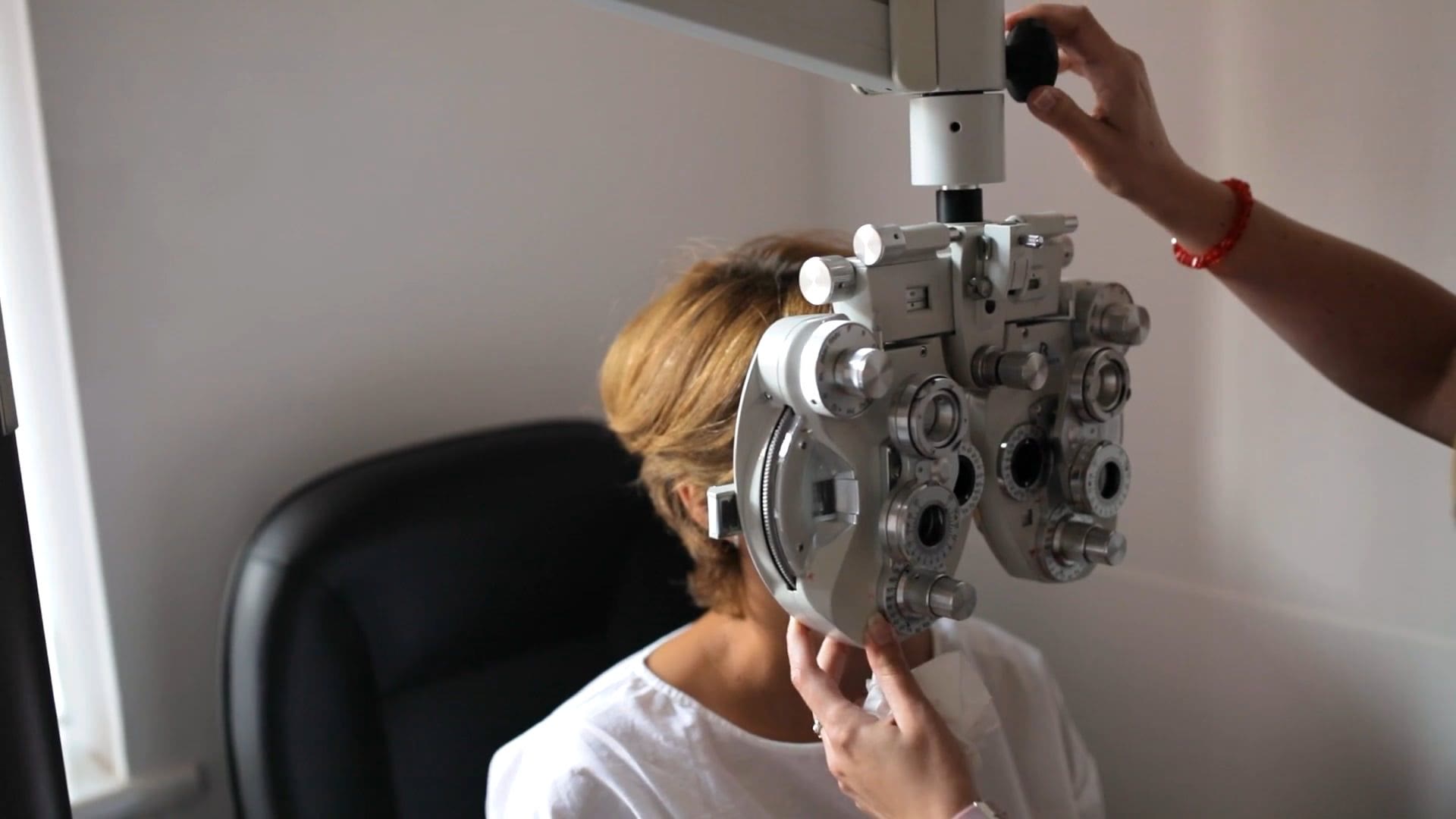
Lane 1. The phoropter.
The small print.
Set in Inter Tight, Inter and Roboto Mono on a twelve column grid. Photographs are stock, shown in black and white. The people in them are not our staff.
Photo credits
- Tima Miroshnichenko on Pexels, glasses on a desk
- Kaboompics on Pexels, eye exam
- Kaboompics on Pexels, frames on a shelf
- NewLA on Pexels, tree lined street
- Pavel Danilyuk on Pexels, optometrist at work
- Kaboompics on Pexels, sunglasses on a rack